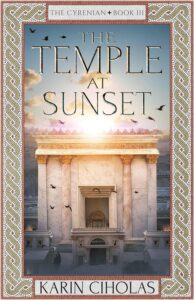
The Temple at Sunset by Karin Ciholas is a thoughtful and emotionally historical novel. It explores faith, family, and the quiet fractures that can shape a lifetime. Set in a world of conflicting beliefs, personal loyalties are tested in this emotionally thrilling novel that explores historical and spiritual dimensions. To make this emotionally inspiring, Ciholas focuses on intimate human struggles, instead of wrapping the historical and spiritual contexts around the characters' journeys.
Among the novel's primary focuses is Simon, and as his family starts to fall apart, this is particularly painful. As a result of her Christianity, Aurelia, Simon's wife, has inspired her sons, Alexander and Rufus, through her actions to convert. While Aurelia's mother is dying, her sons do not return, leaving Simon with grief, loss, and disbelief. Especially in the growing tensions within her family concerning her brothers and their chosen cause, Liora, the couple's daughter, feels disregarded. Liora decides to run away from her home after witnessing a fierce debate between her parents about their family. Liora's departure provokes an individual awakening for each of them. Simon felt he had 'lost his sons to a cause they deem greater than themselves', which Ciholas presents as the emotional climax of the novel.
Thematically, The Temple at Sunset explores the conflict between faith and tradition, the price of commitment, and the unforeseen effects of spiritual awakening within a family torn apart by differing beliefs. Ciholas approaches these themes with care, illustrating how conviction can bring hope to some while leading others to feelings of abandonment and silence. Liora’s narrative, in particular, emphasizes the harm that results when voices are silenced, whereas Simon’s journey delves into grief, identity, and the difficulty of balancing love with loss. Ciholas conveys that faith, much like family, has the potential to both bring people together and create divides. It all depends on the nature of compassion shown.
Ciholas’s prose prioritizes emotional richness and vivid inner experiences over action. The pacing is measured, allowing readers to experience the characters’ suffering and spiritual exploration. Some may find the measured tempo slow, but it suits the novel’s introspective nature and enhances its emotional authenticity.
Quill says: This is a meditation on faith, family, and the silent costs of belief. I recommend The Temple at Sunset for readers who appreciate historical fiction with spiritual and emotional complexity. It is a moving work that lingers long after the final page.
For more information about The Temple at Sunset (The Cyrenian Trilogy Book 3), please visit the author's website at: thecyreniantrilogy.com/
Author Interview