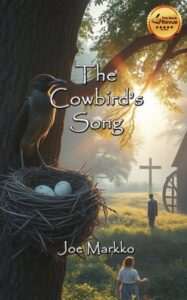
In The Cowbird’s Song by Joe Markko, readers are transported to the late eighteenth century as faith, land, and identity collide in a fragile frontier.
The novel opens with a narrative choice that will be remembered: the voice of the river. This grounds the story in a sense of timelessness and continuity. The plot unfolds around the founding of Shiloh Mills in 1795, a Methodist settlement born from the Shiloh Covenant’s vision. The vision is to live as the earliest Christians did, where worship is as natural as breath. This collides with the realities of expansion, cultural conflict, and competing claims to land already inhabited by the Cherokee. Tension builds between preservation and transformation, coexistence and control.
One character stands out: Nanyehi, later known as Nancy Ward. She is a historical figure rendered with depth and nuance. She is positioned at the heart of the story’s moral and cultural conflicts by her role as observer and advocate. She is tasked with watching the Methodists to determine whether their intentions for peace are genuine. Nanyehi has quiet strength and strategic wisdom. She knows that peace is not passive but requires constant effort. Her character reflects a commitment to ensuring that Cherokee life is not diminished into a narrative told solely by outsiders. Around her, a diverse cast of settlers reveals the complexity of human motivation.
The novel explores coexistence, cultural integrity, and the consequences of expansion. It contrasts those who live in harmony with the land against those who seek to reshape it, often without understanding its deeper significance. The shifting perspectives throughout the story enrich this exploration, allowing readers to see how truth and intention can vary depending on who is telling the story. This multiplicity of voices enhances the tension and invites reflection on how history itself is constructed. The question of whether Shiloh Mills will become a blessing or a curse lingers throughout, giving the narrative urgency and poignancy.
Joe Markko’s writing style is lyrical and evocative, particularly in its use of natural imagery and symbolic narration. The decision to begin with the river’s voice sets a tone that is both reflective and immersive, suggesting that the land itself bears witness to human actions. The pacing is deliberate, allowing the emotional and cultural weight of events to unfold gradually; at times, the measured tempo slows narrative momentum. This approach ultimately serves the story’s depth, encouraging thoughtful engagement rather than hurried consumption. The novel’s descriptive richness paints vivid scenes that linger long after reading.
Quill says: The Cowbird’s Song is a contemplative and layered historical novel that challenges readers to consider the cost of belief, expansion, and identity. This novel offers a meaningful exploration of coexistence and cultural survival.
For more information about The Cowbird's Song, please visit the publisher's website at: homebeforemidnight.com/