
Today, Feathered Quill reviewer Ephantus Muriuki is talking with Tracy Carter, author of Can't Run with the Big Dogs.
FQ: What was it like bringing this long-running antagonist's storyline to a close after four books?
CARTER: Unbelievably satisfying! Veronica, my main character, moved to Colorado far away from her past and a devastating workplace incident perpetrated by the savage defendant in a domestic violence case, Tommy Arnett. Veronica is traumatized, but tough, relying on the steadfast love and close bond she shares with her dog to forge a new career as a dog trainer despite repeated efforts by an incarcerated Tommy to seek revenge against her. Her testimony in court helped imprison him for life … until he escaped. The tension surrounding Tommy’s relentless pursuit of retribution against Veronica builds throughout the first four books in the series, culminating in an explosive final showdown which I thoroughly enjoyed writing. Veronica and Leda battle together to save each other from the evil which has shadowed them for years.
FQ: How did you balance multiple threat threads without losing the reader?
CARTER: That was a challenge in this book as I wanted to escalate the anxiety over the possible threat from Veronica’s past, while additionally introducing new perils surrounding her in the present. Because Veronica and Leda are always on call for search and rescue situations, I wove in the stories of those searches with progress toward solving the central mystery at the thoroughbred racetrack—while also giving hints throughout the book about the danger that Veronica still faces from her long-time nemesis.
FQ: Which villain between Drake, Green and Tommy, was the most unsettling to write?
CARTER: My initial reaction to this great question was to answer that Tommy was the most unsettling. After all, he has undertaken his ruthless vendetta against Veronica over the course of four books! But I actually find the notion of Drake Finnley the most disturbing in retrospect. A serial killer who has flown under the radar of law enforcement for years and snatches young women off the street with awful intentions is both alarming, and unfortunately, not unheard of. I really liked the idea of Leda saving that bad guy’s last and final target from certain death.
FQ: What kind of research did you do to accurately portray Veronica and Leda's work, from trailing scents to the logistics of mountain rescues?
CARTER: In my 20s, I began working as an assistant trainer for a highly-respected dog obedience school, and then added training in rally and agility to the mix. My goal for the series expanded once I extensively researched the varied ways dogs can be of service to people. These are not simply mysteries in which the protagonist owns a dog. The featured dogs are never on the sidelines, but interwoven through every facet of their humans’ lives. In each book, Veronica trains several service dogs— from 911 call center support dogs to conservation canines. I do online research about each new dog “profession” and also speak with several accomplished dog trainers I know. I am also fortunate enough to have friends who are search and rescue team members, attorneys, magistrates, assistant prosecutors, medical professionals, environmental scientists, veterinarians, and are in law enforcement. Thus, I have beta readers—and handy resources whenever I have a procedural question! The answer is usually just a text or phone call away.
FQ: How did you approach balancing the romance with the high-stakes action and mystery elements?
CARTER: Veronica and Ricardo have moved from friendship into a relationship gradually throughout the series and Can’t Run with the Big Dogs represents the organic next step in highlighting the strong bond they have developed with each other. Ricardo is ardently supportive of Veronica’s career, but does not (so far) participate in the high-stakes action she and Leda often face. I love the fact that he respects and admires her commitment to helping her community and her sense of girl power. He is a wonderful reflection of the healing and growth Veronica has attained since moving to Colorado.
FQ: You've trained dogs in real life and clearly have a deep understanding of canine behavior. How much of Leda's abilities and personality are based on real dogs you've known or maybe worked with?
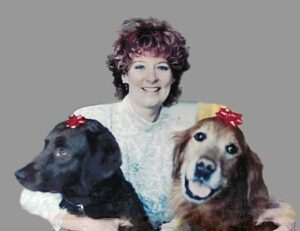
CARTER: Like the fictional dog, my Leda was a Chesapeake Bay Retriever—an abuse and neglect case who had been seized by the county dog warden in horrible physical condition. I adopted her for a whopping $19 on the very day she was scheduled for euthanasia and set about restoring her to good health and building her confidence. Leda grew into a gorgeous, strapping, self-assured girl who repaid my devotion to her by saving me from an attempted middle of the night home invasion just weeks after I moved to a cabin in Colorado. Most of the dogs who appear in my books draw from personality traits and skills of dogs owned by my friends, my family, or me over the years—especially Leda.
FQ: What do you hope readers take away from this book, particularly regarding the themes of resilience and the bond between humans and dogs?
CARTER: I sought to pull readers into the world of a relatable, tenacious female character—who has a heartwarming relationship with her father—and is bolstered at every turn by the love of a phenomenal dog. At its core, Can’t Run with the Big Dogs is the story of the powerful relationship and impressive teamwork between Leda, a mistreated former rescue dog, and her traumatized but healing owner. Leda gives Veronica affection, hope, courage, and sometimes—most importantly—back-up! And I hope readers see such a relationship is real and look at their own dogs with greater understanding for their potential.
FQ: Lastly, you mention that a portion of proceeds go to organizations like Red Rover and the Purple Leash Project. Why is this cause important to you?
CARTER: Having worked as a legal assistant for two different county prosecutors, I have firsthand knowledge of the sad fact that many victims delay leaving their abusers because they cannot find a shelter that will accept them plus their pets. Many times they refuse to get themselves to safety if it means leaving their pets behind with the abusive member of their household. Red Rover and the Purple Leash Project have led the push to make more domestic violence shelters pet-friendly. This is a cause I feel quite strongly about and I am very pleased that Veronica and Leda can help in this mission.
Thank you very much for interviewing me!


Disclosure in Accordance with FTC Guidelines 16 CFR Part 255
Copyrights © 2023 Feathered Quill Reviews All Rights Reserved. | Designed & Developed by Unglitch.io