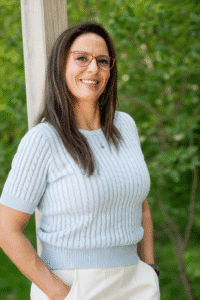
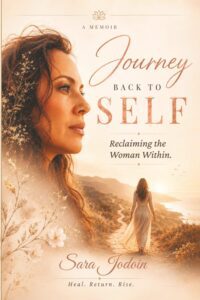
Today, Feathered Quill reviewer Alma Boucher is talking with Sara Jodoin, author of Journey Back to Self: Reclaiming the Woman Within.
FQ: When did you realize that your personal experiences could become a book that might help other women?
JODOIN: When I told my friends I was writing a book, they asked to read it. They were the first ones encouraging me to keep going and finish it. Then my coach read a chapter and responded with that same encouragement. Through their reactions, I began to understand that something very personal to me could also mean something to someone else.
But the biggest realisation came when I started working with my editor. She is a fantastic woman with twenty-five years of experience editing books. Every time she read a couple of chapters, she would write back with questions, reflections, and encouragement. She expressed surprise at the quality of my writing, but what touched me most was how connected she felt to me through my words.
Think about that for a moment. Someone who had spent twenty-five years working with other people’s stories was reading mine and feeling something deeply. That helped me take my own message more seriously.
Her support and guidance were crucial in helping me recognise the importance of what I was sharing. My friends and my coach had encouraged me to finish the book. My editor helped me understand why it mattered.
I began to see that the experiences I had once been afraid to speak about could help another woman feel less alone. She might recognise a part of herself in my story and feel understood, perhaps in a way she had struggled to explain to anyone.
That was when I understood that my story could reach beyond me. And that gave sharing it a whole new meaning.
FQ: The title suggests that healing is less about becoming someone new and more about rediscovering who you truly are. What does returning to yourself mean to you today?
JODOIN: To me, returning to myself means recognising what truly makes me happy, allowing myself to embrace it, and living it without letting other people’s opinions decide what my life should look like.
Let me give you a personal example. I have an amazing partner with whom I have learned to trust and share myself honestly—my feelings, my emotions, even the parts of me that are difficult to show. But one of my biggest challenges at the beginning of our relationship was understanding what love could actually feel like.
Because of my past, love meant care, passion, and beautiful moments, but it also meant arguments, defending myself, and needing to be right. Everything seemed to come with a price. I could barely spend two or three days feeling truly happy before my mind started searching for something wrong.
It was as though happiness was something I would have to pay for later. If I loved fully, I would eventually be abandoned. And my mind had plenty of evidence to defend that belief: Look at your life. People leave. People turn their backs on you. Don’t get too comfortable.
I wasn’t consciously choosing conflict. I was trying to protect myself from a heartbreak that hadn’t happened.
Then I started questioning those beliefs. We hear that relationships are “not a bed of roses” so often that we can begin to expect struggle as the price of love. Of course, two people will have differences. But why should those differences become battles? Why couldn’t we be a team, bringing out the best in each other?
We see business partners build something neither could have created alone. Yet even there, we hear warnings about being used, betrayed, or taken advantage of. Those things can happen, but someone else’s experience does not have to become the script for our own. Sometimes we give those warnings so much power that we enter an experience already preparing for its failure.
Today, returning to myself happens in those small, everyday moments. Something touches a sensitive place in me, and instead of reacting immediately, I pause. I ask myself: What am I actually feeling? What is happening here, and what am I expecting because of my past? What do I need?
That pause gives me room to listen to myself and respond to the person in front of me, rather than to every person who has hurt me before.
With practice, I have become less consumed by what might go wrong and more present for what is already beautiful. I can receive love, enjoy a peaceful day, and feel happy without immediately preparing for loss, and it's totally bliss.
Although, this is not something I learned once and mastered. It takes practice, honesty, and consistency. But today, returning to myself means giving the woman I am now the opportunity to experience life beyond what the woman I was had to survive.
FQ: Your memoir addresses deeply personal subjects, including bulimia, depression, childhood trauma, and heartbreak. How did you approach writing about these experiences while protecting your own emotional well-being?
JODOIN: I would start by saying that this is my own experience. What felt healing for me may feel different for someone else.
For many, many years, I thought I was protecting my emotional well-being by hiding these parts of my life. But do you want to know the surprising thing? So much of what I called protection was actually fear. It was inconceivable to me that people could appreciate or admire me if they knew this side of me.
Me, always determined, fearless, and strong.
What would they think if they knew that, in my twenties, I had given one man so much power over my worth that his judgment of me made me no longer want to live? How could they admire my strength when I saw that part of my story as weakness?
And how could they see me as fearless when I was so often afraid? Afraid of being abandoned. Afraid to trust. And let’s not even talk about losing control, because, in my mind, losing control meant giving someone the opportunity to take advantage of me.
Writing meant allowing those parts of me to be seen. I could no longer tell my story honestly while keeping up the image of a woman who was always strong and had everything under control. That was uncomfortable, but it also became one of the most freeing things I have ever done.
To my surprise, the very things I thought would make people respect me less became the things that connected me more deeply to them.
I realised that I had often intimidated people with an invisible wall that said, “Don’t get too close.” I wanted connection, but I was afraid to let anyone close enough to truly know me. When I allowed myself to be vulnerable, people responded with compassion. Some recognised their own struggles in mine. And the admiration I had been so afraid of losing felt more authentic, because now they could see more of who I really was.
I was no longer the supposedly perfect, strong woman. I was a woman who had lived through so much darkness and kept looking for the light.
That touched me deeply. It allowed me to heal further and to look at my own story with more compassion. I began to understand that being afraid did not erase my courage, and that the moments when I struggled to keep going did not make me less worthy of love or respect.
So, for me, caring for my emotional well-being while writing meant learning to stop judging myself for the very experiences I was trying to put into words. It meant allowing myself to be human.
Little by little, the shame lost its hold on me. Today, I can look at the woman in those pages, with all her fears, mistakes, and determination, and say: I am proud to be her.
FQ: Many people struggle to recognize when they are putting everyone else's needs before their own. Was there a particular moment when you began to understand how these patterns were affecting you?
JODOIN: There were several moments in my life when I knew I was giving too much. Especially when something I did out of love became something the other person expected. You cook, you care, you make an effort because you want to. But the moment you stop, perhaps because you are tired or need care yourself, it becomes, “You don’t love me anymore.” What began as a gift becomes a responsibility you never agreed to carry.
But the moment that affected me most was when my former fiancé left with just twenty-four hours’ notice. It shook me deeply. I thought this was the man I would spend my life with, and suddenly I had to face his absence and questions I could no longer avoid.
I wanted to understand what had happened, including my own part in it.
One of the first things I recognised was that giving is my love language. The more I love someone, the more I want to care for them. And I give in every sense: my attention, my emotional support, gifts, their favourite meals, even remembering their favourite ice cream. Those little things bring me joy.
But, if I am completely honest, there was another reason behind some of my giving. A part of me felt that I had to reward someone for loving me, as though loving me were an effort that deserved compensation.
That was a painful thing to admit.
I would take care of them and spoil them beyond my own limits, hoping to create enough beautiful moments to make up for the difficult ones. The moments when I felt emotionally threatened, when my fears took over and I lashed out at the person I loved most. Afterwards, I would give even more. But all those gestures could not answer the questions I needed to ask about what was happening inside me.
How could I feel secure in someone’s love when, deep down, I did not believe I deserved it? How could I receive their love fully when I struggled to trust them?
I could see how exhausting that had become. I was giving so much while constantly questioning whether I was enough. And instead of allowing myself to grow into the person I was, I would shrink parts of myself to fit the person I was with.
My attention was always on them. Were they happy? Did they feel loved? Would they stay? There was very little room left to ask myself how I felt or what I needed.
That relationship ending made me realise how much I had been hurting myself by treating who I was as something I needed to compensate for. I wanted to be loved, but I kept trying to earn that love through everything I could do for someone.
Giving is still part of who I am. I love that about myself. What I am learning is to recognise when I am giving because it makes me happy, and when I am giving because I am afraid that being myself will not be enough.
FQ: How did motherhood influence your understanding of yourself, your priorities, and the importance of caring for your own emotional needs?
JODOIN: Motherhood, for me, is one of the most beautiful gifts life can bring us. Pure love, joy, and that magical feeling of knowing that a life exists inside us and is growing there. Suddenly, we matter in a different way. There is someone so precious depending on us to eat, to breathe, to grow, to live. It is difficult to put that feeling into words, because it fills a place inside us we may not even have known existed.
During those first months of pregnancy, so much of my attention went towards whatever affected that precious life. What to eat, what not to drink, when to rest. I cared for myself because caring for myself meant caring for my child. And once the baby was born, my dedication went towards this wonderful little human being who loved me and needed me so completely.
And believe me, there were moments when all that pure love felt like everything I needed. I felt happy, complete, in love too. My children were, without a doubt, my priority. Even with the sleepless nights, the exhaustion, and the emotional demands, there was something so beautiful about holding them and knowing that, in my arms, they felt at home.
But looking back, I can see that being filled with love did not mean that all my emotional needs were being met. I could love my children with everything I had and still feel overwhelmed, lonely, or disconnected from myself. It was easier to recognise what they needed than to stop and ask what was happening inside me.
The more our children grow, the less they depend on us in those little everyday ways. The love does not become smaller. It is simply expressed differently. As much as I loved dressing my girls as beautiful princesses or proudly watching my children discover their interests, something was changing. They could walk by themselves, feed themselves, and do things that once required my hands, my attention, my presence.
For me, motherhood showed me how deeply I could love, how much I could give, and how strong I could be. But it also brought me to a difficult question: had I given myself permission to matter outside of being needed?
We can spend so much time looking at our children, noticing every little change, every need, every achievement, that we forget to look at ourselves with that same attention. Then, one day, we look in the mirror and notice how tired we are. We see the changes in our bodies, the years that have passed. But underneath that, there is often something more personal asking to be heard: What happened to my dreams? What brings me joy? What do I need now?
I believe that woman full of hope, love, and strength still exists inside us. She deserves our attention too. For some of us, reconnecting begins with moving our bodies again, eating well, or making time to rest. For others, it means going deeper and learning to recognise our own feelings, needs, and voice. Sometimes, it means admitting that we need help.
What I understand today is that my children can be my priority without every part of me having to come last. I can be deeply devoted to them and still need time, affection, support, and space to breathe. My love for them does not become less pure because I also care about how I feel.
And this is where I wish society offered us more support. We have plans for education, for buying our first home, for having children, even for retirement. Yet so many women are left to find their own way back to themselves after motherhood or divorce. We expect the modern woman to raise her children, care for her home, earn a salary, and keep performing. We give her so many expectations, but very little room to pause and ask, “And me? How am I feeling in all of this?”
Some women are so tired, or have so little support, that finding themselves again feels out of reach. I wish we made more space for them to feel heard and cared for.
Motherhood filled my life with a love that is difficult to describe. It also helped me understand how much tenderness I was capable of giving. Today, I am learning to offer some of that tenderness to myself. The woman who holds everyone else also needs to feel held.
FQ: Your memoir acknowledges that healing is NOT a straightforward process. What was the most difficult lesson you learned during your journey, and how has that lesson changed the way you live?
JODOIN: One of the most difficult lessons was realising that I did not know myself as well as I thought I did. I knew how to be strong, how to keep going, how to take care of everyone and find a solution when things went wrong. But knowing how to survive and knowing who we are are not necessarily the same thing.
For many years, I would say, “This is who I am.” I am independent. I am determined. I do not trust easily. I like to be in control. And to be honest, I was proud of many of these qualities. People admired me for being strong, for always finding a way. So why would I question something that seemed to be helping me move forward?
But there was a question I had not asked myself: Who did I become to survive?
Because underneath some of that independence was the fear of depending on someone who could leave. Underneath my need to control was the fear that, if I did not pay attention to everything, something would happen and I would be hurt again. And underneath all the care I gave to others, there was also a part of me trying to make sure I was worth keeping.
That was painful to recognise. Giving is my love language. I genuinely love taking care of the people I love, cooking their favourite meals, surprising them, creating beautiful moments together. I did not discover that this love was false. I discovered that sometimes, alongside that love, there was fear. I was not only enjoying loving someone. I was also trying to make it impossible for them to stop loving me.
And believe me, those are two very different ways of living the same relationship.
I could be with someone who was showing me love and still be preparing myself for the day he would leave. I could be happy for a few days and then find something to question, something to worry about, until I was no longer enjoying what was actually happening. In my mind, I was being careful. I was protecting myself. But from what? From something happening in front of me, or from something I had already lived and was afraid of living again?
This is what I had to understand about my patterns and my nervous system. A situation could awaken an old fear, and my body would respond as though I needed to protect myself immediately. But because that response was so familiar, I rarely recognised it as fear. I recognised it as me. My personality. My way of loving, my way of reacting, my way of being.
So the difficult lesson was not simply that I had things to heal. It was that I had allowed some of those things to define me, and I was building parts of my life around them without even realising it.
That does not mean that everything about me was a response to pain. My strength is real. My determination is real. And this huge amount of love I have inside me is very real. But I needed to give myself the opportunity to discover how I wanted to live when fear was not deciding for me.
Today, I take more time to notice what is happening inside me before I react. If I want to say yes, is it because I genuinely want to, or because I am afraid of what someone will think if I say no? If I feel the need to argue or pull away, what has affected me? Can I explain what I am feeling instead of immediately trying to protect myself?
Sometimes I can. Sometimes I only understand afterwards. There are still moments when I recognise something I thought I had already worked through. But I try to meet that realisation with honesty and compassion, instead of using it as another reason to believe I am not good enough.
Because the woman who learned all of this was trying to get through life with what she knew at the time. I do not need to be ashamed of her. I need to understand her, and allow myself to learn something different now.
This has changed the way I understand myself. Instead of immediately saying, “This is just who I am,” I give myself the opportunity to ask, “Is this really what I want, or is this how I learned to protect myself?” I do not always have the answer right away. But asking the question gives me a choice I did not realise I had before.
FQ: What do you hope women who recognize their own struggles in your story will take away from reading your memoir? Is there one message you especially want them to remember?
JODOIN: What I hope the most is that she feels less alone. That while reading my story she can recognise something of her own and realise that the feelings she has been hiding, the questions she has been avoiding asking herself, do not make her less worthy or less deserving of being happy.
Because, to be honest, for many years I thought there was something wrong with me. I would look around and see families that seemed so perfect, while mine was full of conflict. I would see families staying together, supporting each other, while in mine it felt like everyone was on their own. I would see women being praised, loved, cared for, and I would wonder why my experience was so different. I had been used, I had been raped, and I felt broken. How could I look at those differences and not ask myself, “Why? What is it about me? Why do other women seem worthy of this love and protection, and I do not?”
Today, I understand that what I could see of someone else’s life was not necessarily their whole reality. But at the time, those comparisons made me feel even more alone. Instead of understanding that what had been done to me did not define my value, I questioned what was missing in me. I did not only carry the pain of what I had lived. I also carried the belief that somehow it said something about what I deserved.
And this is something I deeply hope another woman can begin to question when she reads my book. Because when we have been hurt, rejected, or treated as though our needs do not matter, it can become so difficult to separate what someone did to us from what we believe about ourselves. We start asking why we were not enough to be loved differently, instead of recognising that we deserved care and respect in the first place.
I would love for her to understand that she does not have to spend the rest of her life proving that she deserved to be treated better. She already does.
And believe me, I am not saying that reading those words suddenly makes all the pain disappear. I know how difficult it can be to believe something good about ourselves when we have spent years believing the opposite. Someone can tell us that we matter, that we are loved, and we can genuinely want to believe them while still feeling that they would change their mind if they really knew us.
That is why it was important for me to tell my story honestly. Not only the moments when I was determined and found a way forward, but also the moments when I was lost, ashamed, afraid, and did not know what to do. I do not want her to look at me and think, “Of course she could rebuild her life. She is strong. I am not like her.” I want her to understand that I also struggled to see a future different from what I already knew. I also needed help, and there were things I could not understand on my own.
When I look back today, what touches me is how much love I still had inside me through all of this. I loved my children, I cared deeply about the people around me, I wanted to create beautiful moments and make others happy. Yet somehow, I could recognise everyone else’s reasons to be loved and struggle so much to recognise my own.
So if there is one message I especially want her to remember, it is this: the way someone treated you is not the measure of your value.
Being hurt did not make her less worthy. Being left did not mean there was nothing worth staying for. And struggling to find her way does not mean that she has lost the opportunity to experience something beautiful in her life.
I hope she closes my book with a little more tenderness towards herself. Maybe she will not yet know what she wants to change or where to begin. But perhaps she can stop looking at her story only as a reason to be ashamed and begin to recognise how much she has carried, how much she has needed, and how long she has been waiting to feel understood.
If my story can help her feel understood enough to speak, to ask for support, or simply to give herself another chance, then sharing it has a meaning far beyond me. Because I know what it feels like to look at other people’s happiness and believe that somehow it is not meant for us. And I would love for her to begin allowing herself the possibility that love, care, and happiness can be part of her life too.
FQ: Your book introduces a seven-part approach to reconnecting with the body, personal truth, and self-trust. Could you explain how this method developed from your experiences and how readers can apply its principles in their everyday lives?
JODOIN: When I look back at my journey, I can recognise this pathway: pain, awareness, hope, practice, surrender, love, and happiness. But I did not have these words organised in front of me while I was living it. I was searching for answers, trying to understand what was happening inside me and how I could feel differently. It was afterwards that I could recognise how these experiences had helped me return to myself.
And I would not describe them as steps we complete once and never revisit. Sometimes I felt hopeful and still deeply hurt. Sometimes I understood something about myself but did not yet know how to live differently. For me, the pathway was learning through those experiences, not finding a way to avoid them.
Pain was where my journey began. For years, I kept going because there were children to care for, responsibilities, things that needed to be done. I was used to asking myself what I had to do next, not necessarily how I was feeling while doing it.
But after my accident, I could not continue in the same way. There were injuries to my body that required care, time, and help. And there was also the memory loss, which changed my relationship with myself in a way I had never imagined.
I could not remember parts of my life. People knew me, had memories with me, had an understanding of who I was, while I could not always remember the experiences that connected us. It was frightening and confusing. But looking back, I can also see how it created an interruption in patterns I had been living without questioning.
That became an important part of awareness. When you cannot remember parts of your own story, how do you know who you are in that present moment? I could not always rely on who I had been, what I had chosen before, or what other people expected from me. Sometimes I could not even remember the importance a person had held in my life, so their opinion no longer carried the same weight.
I had to consult myself differently. How did I feel with this person? Did I enjoy what I was doing? Was I comfortable, afraid, happy? Without access to all the explanations I would normally have given myself, my feelings became something I needed to listen to in order to understand my experience.
I am not saying that losing my memory was a gift or something necessary for healing. It was difficult. But it interrupted the familiarity that had allowed me to accept certain things simply because they were part of my life. I had to discover what felt true for me now, without being able to explain everything through my past.
And we do not need to lose our memories to begin asking those questions. We can pause in an ordinary moment and notice: do I actually like this? Did I want to say yes? Or am I doing what I have always done because I have never given myself permission to question it?
Hope developed as I began to see that there could be more to my life than what I already knew. Sometimes that hope came through someone else’s kindness, someone believing in me when I was struggling to believe in myself. Sometimes it came through a small change that showed me I was not standing still.
For me, hope did not mean knowing that everything would work out. It meant being willing to search. And for a reader, it can begin that simply too: speaking honestly to someone, asking for support, allowing ourselves to consider that the way we feel today does not have to be the way we feel forever.
Then came practice, because understanding something and living it are not the same. I could recognise that I needed rest and still feel guilty when I stopped. I could understand that someone loved me and still become afraid when I felt vulnerable.
So I had to practise paying attention before reacting. Sometimes that meant explaining what I was actually feeling instead of arguing about something else. Sometimes it meant keeping a small promise to myself. If I recognised that I needed time, could I respect that need instead of dismissing it as soon as someone needed something from me?
This is how self-trust began to become practical. Not only telling myself that I mattered, but seeing whether my choices reflected that. And when they did not, trying to understand why instead of immediately judging myself.
Surrender was particularly difficult because I am determined. When I love someone or believe in something, I give so much of myself. For a long time, letting go felt like admitting that I had not tried hard enough.
But there is a difference between giving our best and exhausting ourselves because we cannot accept that something is not working. I had to understand that my love and effort could not control every outcome. I could care deeply and still need to stop. I could lose a future I had imagined without losing every possibility of being happy.
For someone reading my book, I would invite this question: am I continuing because this is genuinely what I want, or because I am afraid of what stopping would mean about me? Sometimes we are holding on not only to a situation, but to the belief that making it work will finally prove our value.
And love was there throughout all of this. My love for my children, for the people around me, for life itself. But I needed to understand how to include myself in that care, and how to receive it without feeling that I owed something in return.
If someone I loved was exhausted, I would want them to rest. If they were hurting, I would want to understand. So why was I so demanding with myself? Why did I believe that I had to handle everything before I could deserve a little peace?
Learning to love also meant allowing myself to be loved. Sharing a difficult day instead of hiding it. Accepting help. Enjoying someone’s presence without constantly questioning why they wanted to be there.
And that changed my understanding of happiness. I had spent so much time believing that once everything was resolved, I would finally be able to relax and enjoy my life. But life does not stop bringing challenges. If I needed everything to be perfect, when would I ever allow myself to be happy?
Today, there are moments with my children, with my partner, or simply in my own company when I feel so grateful to be here. Not because nothing hurts or everything is settled, but because I can appreciate what is beautiful without allowing everything else to take that moment away. After all I have lived, being able to feel that joy so fully touches me deeply.
So I would not ask someone to turn this pathway into another list of things they must accomplish. Begin with one honest moment. What are you feeling? What do you need? What would you choose if you allowed your own answer to matter too?
For me, that is how returning to myself becomes part of everyday life. Not forgetting my story, but no longer allowing it to give every answer about who I am or what is possible for me now.
FQ: What was the most surprising thing you discovered about yourself while writing this book? Did revisiting your past change your perspective of any particular experience?
JODOIN: The most surprising thing was realising how much I had continued to hurt myself because of experiences I had with other people. What happened did not end when the situation ended. I carried it into the way I saw myself, what I believed I deserved, and the way I allowed myself to be treated.
Because my parents had not protected us the way they should have, I grew up questioning whether I deserved that protection, whether I deserved to be loved. I felt that I did not belong. Somehow I thought i was abused because i deserve it. I carried the shame of being a victim of different forms of violence as though it said something terrible about me. I felt like the black sheep, the one with something wrong inside her.
And those feelings followed me into other stages of my life. When someone hurt me, I questioned my value. When a relationship ended, I looked for what was wrong with me. Somehow, even when I was the one who had been harmed, I could still find a reason to be ashamed.
To be honest, when I started writing, I thought I had already healed so much of this. I could talk about my experiences, recognise certain patterns, and I believed I had made peace with parts of my past. But then I noticed something in my writing.
I would describe a situation, explain how painful or difficult it was, but avoid the word that actually named what had happened. I could give details, describe my emotions, and still stop before saying it clearly.
That was when I had to ask myself: why is it so difficult to name something I have already lived? What am I afraid people will think of me if I tell them the truth?
I realised that I was still hiding. I was still trying to decide how much of my reality someone could see before they would no longer respect or admire me. So I made a commitment to myself to open my heart and speak the truth. I went back through the chapters and began naming what I had been avoiding.
And believe me, that was not simply changing words. It was allowing myself to be seen in parts of my life that I had spent years feeling I needed to hide.
Throughout the writing process, my coach, my editor, and my friends would read my chapters and give me feedback. The more honestly I wrote, the more their responses surprised me. They were not judging me the way I had feared. They encouraged me to keep going, appreciated my openness, and shared how deeply they connected with what I was writing. The parts I thought would make them think less of me were helping them understand me more.
That really changed something in me. I was discovering that being me had nothing to do with being used or hurt. Those experiences were part of my life, but they were not who I was, and they did not explain what I deserved. Me, I deserved love. I deserved protection, care, and a place where I felt I belonged. I had deserved those things all along, even when they were not given to me. Their absence did not mean that something was wrong in me.
And yes, memories came to the surface. But the more I opened my heart, the more I began to revisit them differently.
I could see the little girl I had been, her pain, her innocence, all this love she had inside her and wanted to give. A child who needed to feel safe, who needed someone to hold her and make her feel that she mattered. Instead, she was being hurt where she should have been protected. Looking at her, I no longer wanted to ask what was wrong with her. I wanted to understand how she had felt so alone while still having so much love for the people around her.
Then I could see the teenager being pulled into a web of abuse, not fully understanding what was happening to her. Still innocent, still lost, searching for love and somewhere to belong, without someone there to recognise the danger and protect her. How could I keep judging her as though she should have understood everything? As though needing affection was something she should have been ashamed of?
And as I continued through the book, I began to look at the other past versions of myself with that same compassion. The young mother trying to provide for her children. The woman giving so much in a relationship, hoping to feel loved and secure. I could see not only the decisions she made, but the fear, the loneliness, and the hope behind them.
This did not mean that every choice I made was right. It meant that I could understand my mistakes without believing that they made me deserving of being hurt.
I began to see the person who had been wronged, instead of continuing to believe that I was the one who was wrong.
The past had not changed. But I was no longer revisiting it only to find reasons to judge myself. I was finally able to look at who I had been with love, to recognise her innocence where I had carried shame, and to understand how much she had needed the compassion I was only now learning to give her.
FQ: Now that Journey Back to Self: Reclaiming the Woman Within is available to readers, what do you hope the next chapter of your own journey will look like, and what projects or initiatives are you most excited about sharing with your audience?
JODOIN: For the next chapter of my journey, I want to create more opportunities to be with people, not only through my words, but in person. Alongside the coaching I already provide, I am developing retreats where I can welcome them into an environment that gives them some distance from the demands of everyday life.
Because sometimes, even when we genuinely want to take care of ourselves, there is always something asking for our attention. Someone needs us, there is work to finish, a responsibility we cannot put aside. And by the time we have taken care of everything else, there is very little time or energy left to ask ourselves how we are actually feeling.
I want to create a space where, for a little while, those external demands do not decide how someone spends their day. An environment where they can put their worries aside and allow themselves to be cared for, where their needs have been thoughtfully considered, every meal is planned with care, and every workshop welcomes them as they are, without expecting them to be further along or different from who they are in that moment.
Because when we are so used to taking care of everything and everyone, having someone take care of us can mean so much. Not having to organise the next meal, think about what needs to be done, or make sure everyone else is comfortable. Simply having the space to breathe and ask, “How am I feeling? What do I need?”
I want them to be able to pause without feeling guilty, listen to themselves without rushing to find an answer, and begin to discover what they miss, what they want, what makes them feel alive. Not who they are expected to be for everyone else, but who they are when they feel welcomed, cared for, and free to give themselves that attention.
And I am excited about being there beside them. To welcome them, listen, guide them, and hopefully inspire them, while allowing each person to have their own experience. I know how meaningful it can be to feel supported while exploring parts of ourselves that we have ignored or found difficult to understand. I would love for these retreats to offer that opportunity, with love, compassion, and room for each person to go at their own pace.
I am also working on another book, which will explore the pathway I describe in Journey Back to Self in a more practical, workbook-oriented way. I want to go deeper into the connection between our experiences, the way our brains work, and the patterns we repeat, and help readers bring that understanding into their everyday lives.
Because recognising ourselves in a story can be powerful, but afterwards we may still ask, “Okay, I understand this about myself now, but what do I do with it? How do I begin to change something I have been doing for so many years?”
That is what I want the next book to help with. I want to give readers a more concrete way to explore what they are discovering about themselves and put it into practice. Something they can work through, return to, and use beyond the moment when they feel inspired.
For me, the first book is the inspiration. The next one is the guiding map. Not a map that tells everyone to live the same life, but one that helps each person find their own way with more understanding and direction.
What excites me most is being able to continue this connection. My story does not have to end with someone closing the book. It can become the beginning of a conversation, an experience, or a decision to finally give themselves some of the attention and care they have been giving to everyone else.
For more information about Journey Back to Self: Reclaiming the Woman Within, please visit the author's website at: sarajodoin.com

Disclosure in Accordance with FTC Guidelines 16 CFR Part 255
Copyrights © 2023 Feathered Quill Reviews All Rights Reserved. | Designed & Developed by Unglitch.io