
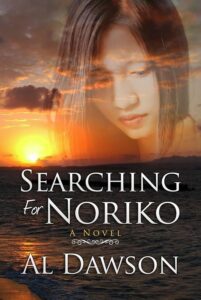
Today, Feathered Quill reviewer Douglas C. MacLeod, Jr. is talking with Al Dawson, author of Searching for Noriko.
FQ: Searching for Noriko has a lot of moving parts, and yet you managed to keep all of those details neatly organized to ensure readers could feel comfortable with the multiple storylines. Can you speak about your organizational process while writing this work and what sorts of techniques you used to keep each storyline from crossing over into the next?
DAWSON: I wish I could say there was an organizational process beyond a few scraps of paper at my elbow to keep scenes and storylines straight. But there isn’t. Not always easy but it works for me. The ending of a scene is always an opportunity to pick up the string of another subplot, so long as timelines aren’t confused. Keeping the whole of the story and its moving parts in your head can be challenging for sure. It requires lots of re-reading.
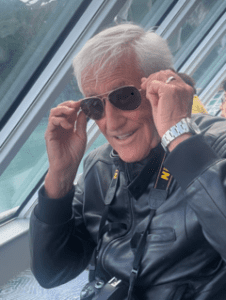
FQ: Can you walk readers through a play-by-play analysis as to how you came up with such a compelling and multi-faceted narrative?
DAWSON: Two of my mother’s brothers were captured by the Japanese when Bataan fell in 1942. Theirs was a story of heroic survival in appalling circumstances. They both endured years of captivity and came home, becoming part of family legend. I wanted to tell a story, not a biography, but fictional based on characters who resembled my uncles. I also was interested in exploring the secret that tortured my main character, Frankie, over events in Okinawa decades ago. Because of that secret, I concluded that there was a Japanese side of the story that needed to be told that required the creation of Soichiro, Noriko, Kume and Kazuo. Complexity begat complexity until a rekindled romance and an international crisis involving imperial Japanese gold and North Korean nuclear ambitions served to bring matters to a conclusion.
FQ: Your work is historical fiction, in that many of your characters speak a great deal about and closely experience Japan, Japanese culture, and Japan during and after World War II. Can you speak more about your own connections to Japan, speaking specifically as to why that part of world history is so captivating to you?
DAWSON: My connections to Japanese history and culture are vicarious at best. Much of what I know about Japan is from considerable study and research. However, I owe much to a special person named (not coincidently) Noriko, a Tokyo woman who became the wife of a close friend in the US. She guided me through usages such as how to address people based on degree of familiarity, types of food and utensils, plausibility of certain scenes (she recalled being hurried away as a child from the firebombing of Tokyo in1945). My interest was first inspired by my uncles who survived imprisonment, and was reinforced by a wish to know “the other side of the story”. Clint Eastwood’s film, Letters from Iwo Jima, was an influence that also piqued my interest. What I find captivating about Japan is the resiliency of its people after devastating bombings and a culture that prizes elegance, a kind of courtesy seldom seen elsewhere.
FQ: You speak a great deal about World War II and its place in American history; however, you do not speak about 9/11, at least not in a comprehensive way. Was that a conscious choice, and if so, why? Was it because the events that occurred on September 11th would have detracted from the fictional narrative or the details of World War II?
DAWSON: I’ll let you in on a little secret. Searching for Noriko was my first attempt to write a novel. And I made all the errors one would expect of a novice writer, chief among which was a manuscript that was way too long. A professional editor I hired said an entire subplot really had to go to reduce complexity and plot distraction. As it happens, that subplot contained characters and scenes that were centered on what happened when AA 77 hit the Pentagon and the aftermath, and the smoldering wish for vengeance one of the characters harbored against the terrorists. It was like giving up a child, but I relented.
In retrospect, it was probably a good excision. 9/11 serves as a backdrop in scenes where Kazuo muses about whether US retaliation will look anything like 1945 Japan, and Frankie watches the news, wishing the worst on the perpetrators. Then there’s the scene at the NYC restaurant where Gary and Kume meet, which takes place more than two months after 9/11. Since the focus of the story is not modern terrorism but the search for closure and redemption, too much about 9/11 would have taken the narrative in a direction that wouldn’t have been helpful.
FQ: Later on in the book, you speak about how much of what happens at the end of Searching for Noriko is based on “fate.” Can you speak to the concept of “fate” from your perspective and whether or not that was an underlying theme you were conscious of while writing the book? How does “fate” play a role in our everyday universe?
DAWSON: Honestly, I wasn’t conscious of “fate” as an underlying theme. When the characters of Searching for Noriko speak of fate, I believe they are trying to describe what some would call destiny. My Japanese characters tend to regard fate as the Stoics do: you can’t change external events outside your control, but you can control your own response to them. Asian religions seem to lean that way. Fate also plays a big role in classical mythology where the gods sometime intervene. One need only consider the fates of Icarus and Sysiphus, even Narcissus.
How does fate operate in our everyday universe? It’s not something you can plan or control. It’s a result of forces that some might regard as divine. A personal example: many years ago, I made a business trip from New York to Baltimore. I was there to interview people at an office there. It was one day only, May 30,1974. I met and interviewed a young woman named Jane. If she had been ill that day or otherwise absent, chances are she and I never would have met. A once in a lifetime event. We are now celebrating our 48th wedding anniversary and are the parents of daughter Erin. Was it fate? Kismet? Serendipity? I think it was destined.
FQ: Can you speak a bit about character development in Searching for Noriko? Oftentimes, in novels, authors have a very difficult time establishing one voice for each character, but you do that masterfully. Was this hard to achieve for you, or was this planned before you put pen to paper?
DAWSON: I had a good editor who once advised me that viewpoint is critical to telling a successful story. Pick a few characters through whose eyes the story will unfold, characters that generally would be people you want to root for. I try to do that through dialogue. I enjoy writing dialogue because it feels natural, it’s what pushes the narrative and provides background. Giving voice to characters becomes easy once you have established your viewpoints. It’s actually the fun part of writing as you breathe life with all its likes, dislikes, failings, virtues etc. into those special fictional people you have invented. And, after all, aren’t screenplays mainly dialogue driven?
FQ: As a follow up: Why did you add Tony, Ellen’s new boyfriend, to the mix? Is it just to show that the apple does not fall far from the tree? How does Tony move the entirety of the story along, at least from your perspective?
DAWSON: Ah, Tony Wags. Admittedly a strange match for Ellen. Did Ellen need a new boyfriend? And why wasn’t he a handsome, strapping marine with perfect teeth instead of Tony? You are correct. Ellen didn’t need a bf and Tony wasn’t necessary to move the story along. Ellen, like many of us in our goofy youthful past, has fallen for a head scratcher of a romantic partner. His role is mainly to get under Frankie’s skin and treat Ellen like a queen.
FQ: The climax of the book is action-packed and changes the tone of the book from this emotionally-driven drama to an action-packed thriller. Why go in this direction as opposed to having Frankie just connect with Noriko again? Is it because you needed something to ensure that Noriko’s husband, Soichiro, was on board with the reconnecting?
DAWSON: A simple reconnection would be disappointing to most readers, leaving lots of loose ends. Without something as dramatic as the fight at the bunker, it is unlikely that Soichiro would even agree to allow Noriko to meet Frankie. Soichiro made it clear he considered Frankie a coward and resented that Frankie should intrude into the lives of Noriko and Kume, who he regarded as his own daughter. The fight gave them an opportunity to bond. The seeds of the thriller were already in place due to Gary’s sleuthing work on behalf of his friend Nate Goldman.
FQ: I noticed a tone that is indicative of Japanese cinema: the multiple storylines of Kurosawa; the family dynamics of Ozu; the reflectiveness of post-war films; the samurai films of the later years. Was Japanese popular culture in the forefront or back of your mind while writing Searching for Noriko?
DAWSON: Movies like Black Rain and The Last Samurai, and series like Tokyo Vice always have intrigued me. The warrior ethos, the family ties draw me in. I am far from an expert in modern Japanese filmography but my novels typically feature plots with multiple storylines. The reflectiveness of Kazuo and Soichiro on their experiences as young soldiers is probably little different from those of our own veterans. Frankie’s nightmares and memories of Okinawa haunt him still. But yes, to answer the question, Japanese popular culture was very much in my mind, especially in writing the chapters involving Kume and her upbringing, and later her business.
FQ: What is about this time period that is important to you? Do you see those in the Greatest Generation becoming lost, or is it that you think there is not enough discussion about how World War II vets’ (or vets’, in general) struggle throughout their lives with the choices they made or the choices that were made for them during those years? Do their stories need to be told more?
DAWSON: As I said earlier, the stories of my uncles’ survival and return home was such a major event in my mother’s family history that I felt obligated to honor it, even if in fiction. It was one of those rare things that had a happy ending.
There is such a dwindling number of WW II vets today that it is a generation that will soon pass into memory. Combat veterans are a reticent lot, holding terrible memories and feelings of shame or guilt inside. Frankie is a fairly good example. Many will open up only with others like themselves. Maybe it’s meant to be that way. For anyone who “wasn’t there”, it can’t be fully comprehended. As Jack Nicholson’s Colonel Jessup famously shouted, “You can’t handle the truth!”
But as a nation we can surely do better in trying to address the psychological struggles of homecoming veterans.

Disclosure in Accordance with FTC Guidelines 16 CFR Part 255
Copyrights © 2023 Feathered Quill Reviews All Rights Reserved. | Designed & Developed by Unglitch.io